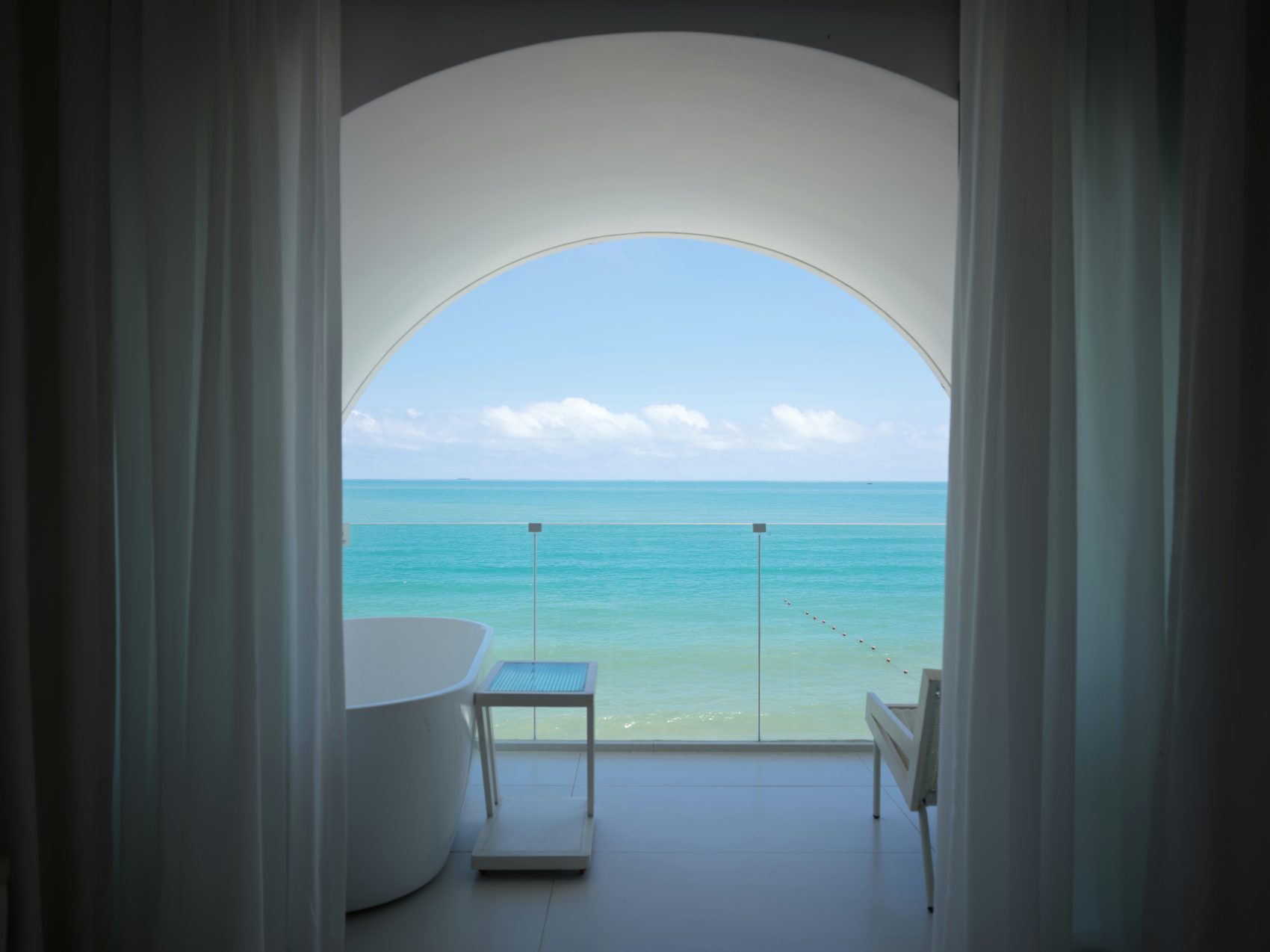

Insights · Texture

A room can be quiet and still be loud.
We have been in houses around Los Cabos where nothing makes a sound and you still cannot settle. The air conditioning is silent. The road is far enough away. And yet something keeps talking: a wall of gloss that throws the light back at you, a floor that clicks under a shoe, eleven different materials arriving at the same corner.
Silence in a room is not the absence of noise. It is the absence of things asking for attention.
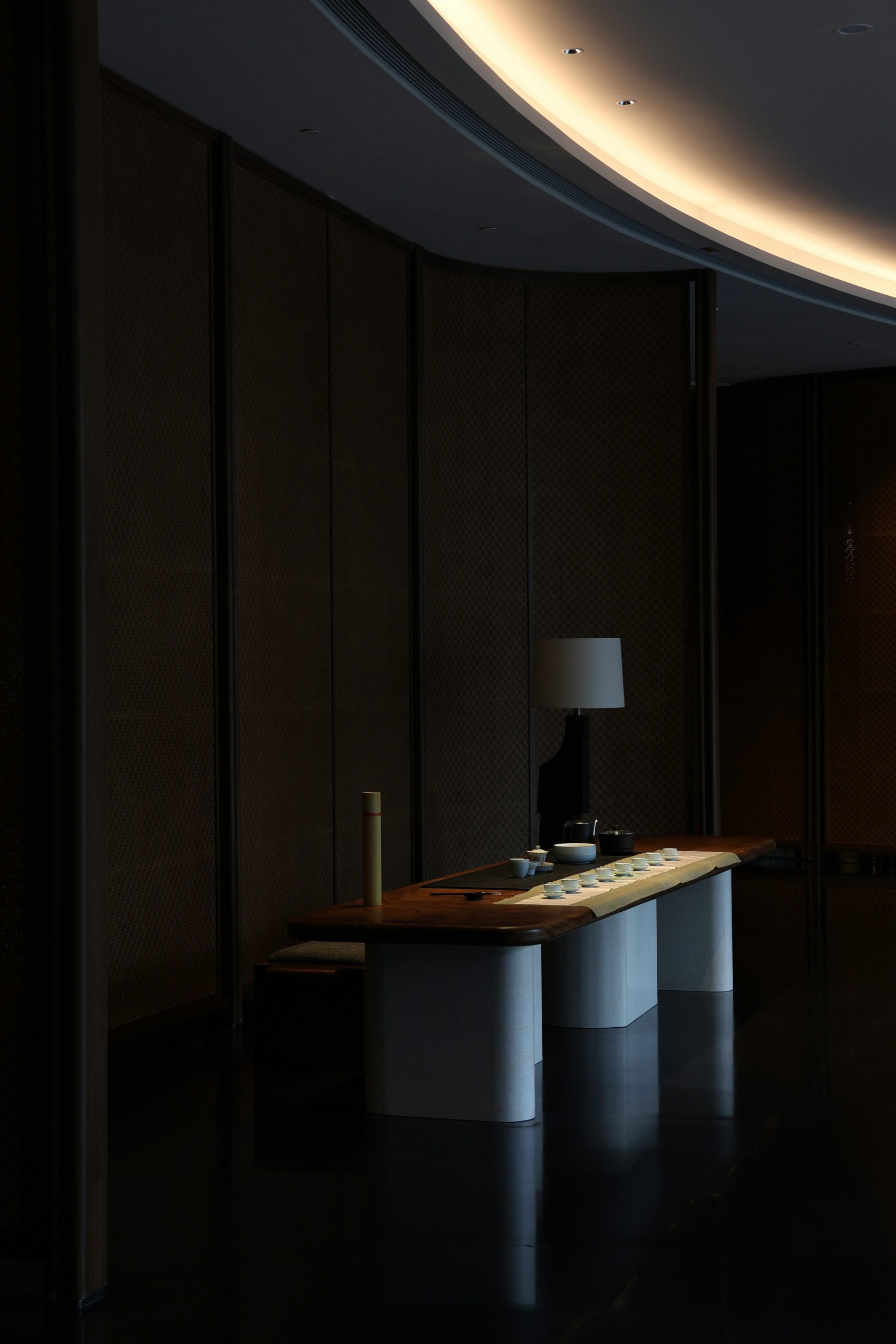
Texture does most of the work. A hand troweled plaster wall absorbs sound, and it also absorbs looking. Your eye lands on it and stops, because there is nothing there to solve. Polished stone does the opposite. It bounces both.
This is the balance we are usually after, and the one we do not always get right. Too much softness and a room goes vague, the kind of place that could be in any resort on any coast. Too much restraint and it turns cold, and people sit on the edge of the sofa without knowing why. A room has to be quiet and still feel like somebody lives in it.
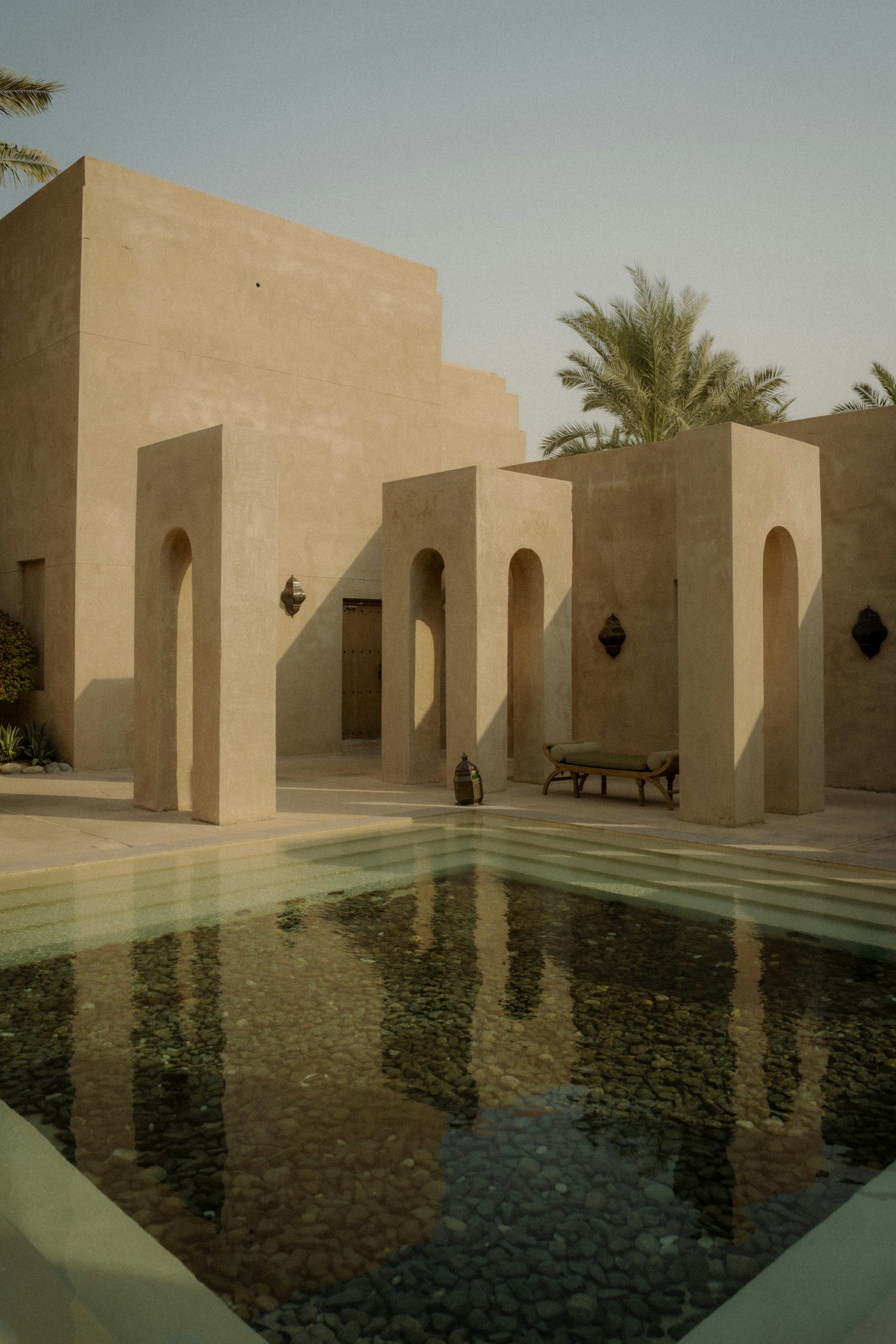
The point of getting it right is not the quiet itself. It is what the quiet leaves room for. In Baja that is almost always the outside. The wind changes around four in the afternoon. The light goes orange on the rock. There is the sea a few streets down that you only start to hear once the room stops competing with it.